Opening a restaurant in Saudi Arabia has never been more exciting, or more crowded. New concepts open every month, delivery apps put dozens of choices on every phone, and guests are quick to try something new.
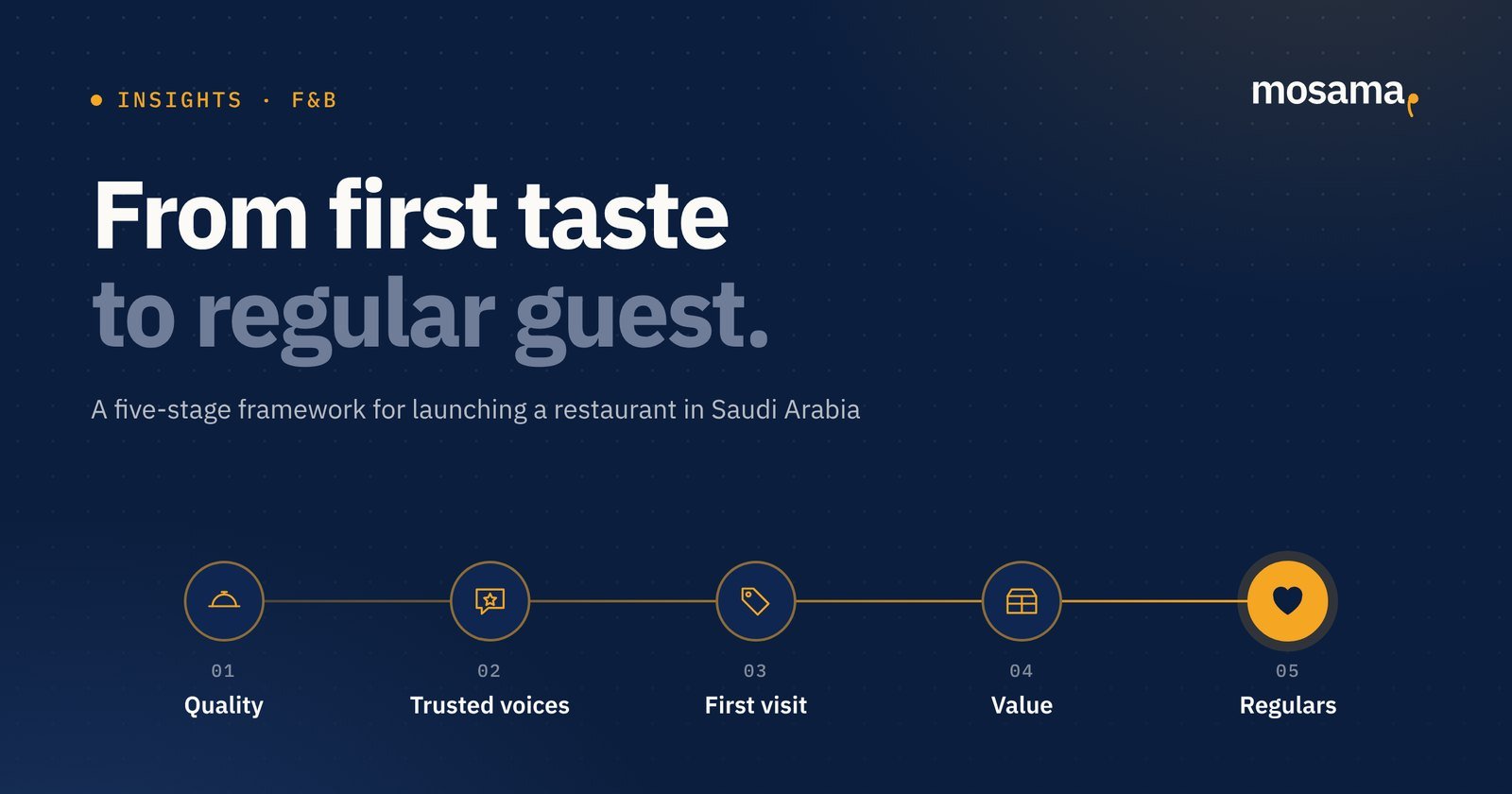
In that market, great food alone is not enough, and neither is a big launch. What decides whether a restaurant lasts is the order in which things happen. Here is the five-stage framework I use when I work with restaurants in the Eastern Province.
Stage 1: Get the food right before anything else
Marketing makes a restaurant visible. It cannot make a guest come back. Only the food does that.
Before any campaign, the kitchen needs to deliver the same taste, the same portion and the same quality on every order, whether the guest is sitting at the table or ordering from home. Fix the recipes, train the team, and test the delivery packaging. A guest who has a great first meal and an average second one rarely orders a third time.
This is the least glamorous part of a launch plan, and everything else depends on it.
Stage 2: Let trusted voices introduce you
A new restaurant is a stranger. People hesitate to spend money on a name they have never heard.
The fastest way to change that is through people your audience already follows: well-known personalities and food creators. When someone they trust visits, tastes and shares an honest reaction, a new restaurant becomes a place worth trying in a single day.
Three things make this work:
- Fit over follower count. Choose people whose audience lives in your city and matches your guests.
- A real experience. Let them try the menu as any guest would. Honest reactions persuade more than scripts.
- Your own content alongside. Keep posting steady, good-looking content of your food and your place, so new visitors find a brand that looks established.
Stage 3: Give people a good reason to try
Awareness makes people curious. A welcoming offer turns curiosity into a first visit.
In the early months, offers are an invitation: a chance for more people to taste the food at a price that makes trying easy. They work best when they are:
- Built around your signature dishes, so the first taste is the one you most want people to remember.
- Clear and honest, with simple terms and no surprises at checkout.
- Part of a plan, with a clear purpose, a set period and a defined audience.
The goal of this stage is simple: to let as many people as possible discover the food.
Stage 4: Move from discounts to value
As the restaurant becomes known, guests stop needing a reason to try it. They come back because they like the food.
That is the moment to shift the conversation from price to value: family meals, combos that offer more for the money, new dishes, seasonal menus. Guests still get a good deal, but the reason they order is the experience, not the discount.
This shift keeps prices fair and sustainable, which is what lets a restaurant keep its quality high over the long run.
Stage 5: Look after the guests who come back
Every successful restaurant has its regulars: the guests who order every week, recommend you to friends and defend you in the comments. They are the restaurant’s most valuable asset, and they deserve to be treated that way.
Looking after them is less about discounts and more about appreciation:
- Recognise them. A personal thank-you means more to a regular than a generic promotion.
- Let them taste first. New dishes and seasonal menus are a natural gift for the people who love you most.
- Answer fast. Every question and message deserves a quick, friendly reply, from the first order to the hundredth.
- Listen. Regulars tell you what to improve. Act on it, and tell them you did.
A restaurant that looks after its regulars needs to work less hard to find new guests, because its regulars bring them.
Four common mistakes
- Marketing before the kitchen is ready. Advertising a restaurant that isn’t consistent yet only spreads disappointment faster.
- Offers without a plan. An offer with no purpose or end date stops being an offer and becomes the price.
- Slow replies. Questions about the menu, delivery or bookings are guests ready to order. A late reply is a lost meal.
- Counting orders, not returning guests. A busy month means little if those guests never come back.
A checklist for your launch
- Lock recipes, portions and quality standards before opening day.
- Test delivery packaging so food arrives as good as it leaves.
- Choose personalities and food creators whose audience matches your guests.
- Plan opening offers around signature dishes, with a clear purpose and period.
- Prepare value meals and combos for the months after launch.
- Set a target response time for every message and comment.
- Track how many guests return, not just how many orders come in.
- Plan how you will thank your regulars.
See it in practice
I have applied this framework with restaurants and food brands in Saudi Arabia and Egypt. You can see the results in my case studies.
If you’re opening a restaurant or café, or your branch is busy but not growing the way you want, I can help you build the plan and the team to run it. Work with me.